And How to Start Designing Around
How Your Mind Actually Works
A free short guide for people who feel exhausted by ordinary life—
and keep wondering why everything feels harder than it should.
This isn’t a productivity system. It’s a different way of understanding why so many systems fail under real-life conditions.
Why Your Week Keeps Collapsing
Why Your Week Keeps Collapsing
And How to Start Designing Around How Your Mind Actually Works
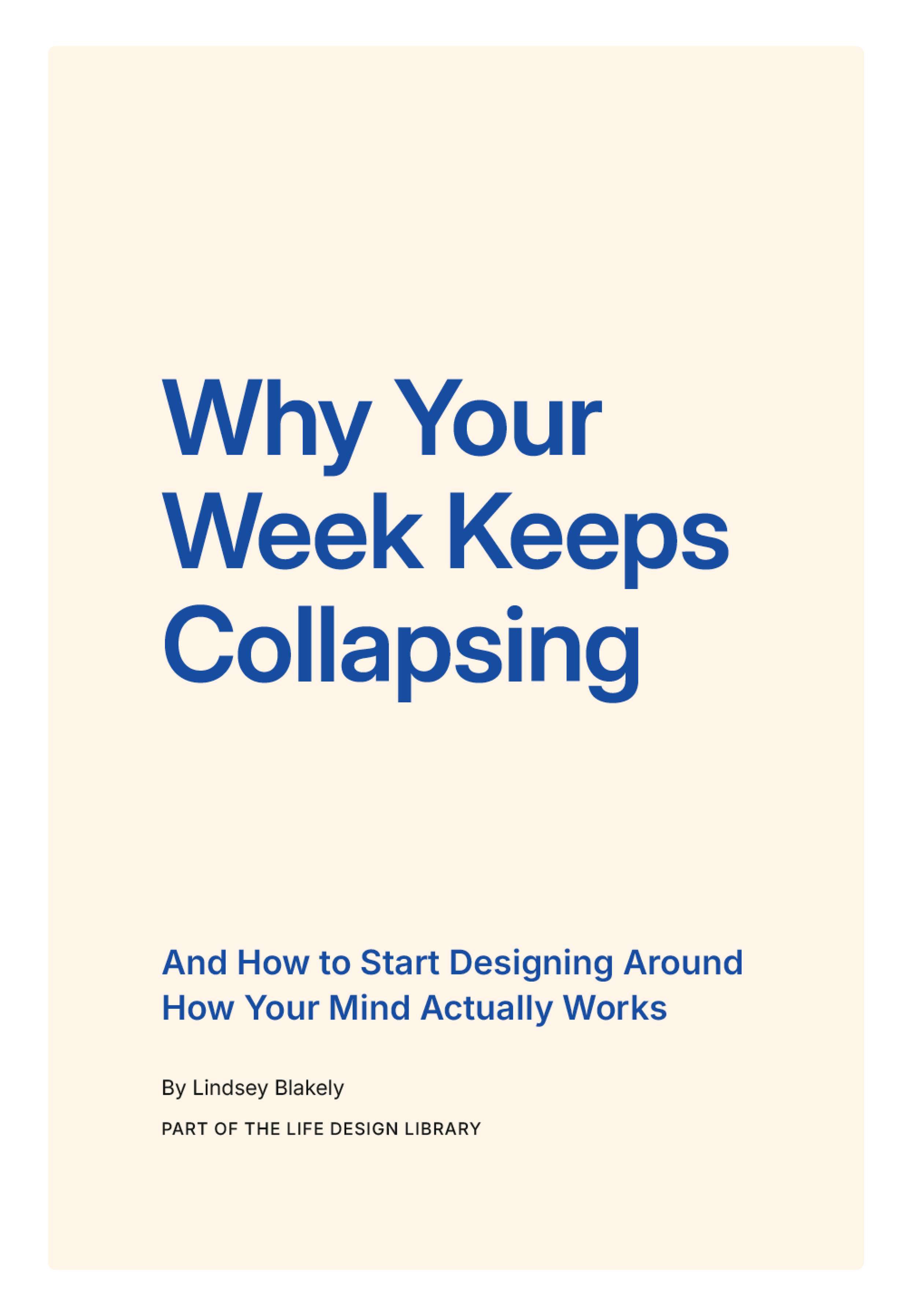
A free short guide for people who feel exhausted by ordinary life—and keep wondering why everything feels harder than it should.
This isn’t a productivity system. It’s a different way of understanding why so many systems fail under real-life conditions.
You can care deeply about your life and still struggle to hold things together consistently.
You can have good intentions, useful tools, enough intelligence, and genuine motivation—yet still find yourself overwhelmed by ordinary life.
Sometimes the problem isn’t effort.
Sometimes it’s that the systems surrounding you assume stable energy, uninterrupted attention, low stress, predictable capacity, and endless recovery.
Real life rarely works that way.
Over time, it’s easy to start interpreting this mismatch as personal failure.
The unfinished task feels personal. The abandoned routine feels personal. The constantly collapsing week feels personal.
But often, the issue isn’t a lack of discipline. It’s that the structure itself is asking too much from a human being under real conditions.
You can care deeply about your life and still struggle to hold things together consistently.
You can have good intentions, useful tools, enough intelligence, and genuine motivation—yet still find yourself overwhelmed by ordinary life.
Sometimes the problem isn’t effort.
Sometimes it’s that the systems surrounding you assume stable energy, uninterrupted attention, low stress, predictable capacity, and endless recovery.
Real life rarely works that way.
Over time, it’s easy to start interpreting this mismatch as personal failure.
The unfinished task feels personal. The abandoned routine feels personal. The constantly collapsing week feels personal.
But often, the issue isn’t a lack of discipline. It’s that the structure itself is asking too much from a human being under real conditions.
The problem might not be you
Inside the guide
Inside the guide, you’ll explore:
Why planning often breaks before the week even begins
How invisible cognitive load accumulates
Why rest sometimes doesn’t actually feel restorative
How environments increase or reduce mental friction
Why systems built around ideal conditions often collapse under real life
How to start designing more humane structure around the life you actually live
The goal isn’t optimization. It’s learning how to work with your real conditions instead of constantly fighting them.
Because once you can see friction more clearly, you can start reducing unnecessary struggle more intentionally.
This may be helpful if…
You constantly feel behind, even when you’re trying hard
Your routines repeatedly collapse after short periods of success
You feel exhausted by ordinary life logistics
Small tasks often feel disproportionately difficult
You function well in bursts, but struggle with sustained consistency
Traditional productivity advice tends to create more shame than relief
You suspect your environment or systems may be creating more friction than you realized
You don’t need a diagnosis to recognize yourself here. You only need the feeling that ordinary life seems to require more effort than other people realize.
Where the ideas come from
Hi, I'm Lindsey.
I'm an information designer and writer
interested in a simple question:
Why do some systems make life
feel harder than it needs to be?
Across my design work, writing, and podcast, I explore how environments, expectations, and everyday structures shape our ability to think, plan, and function.
This guide is one small piece of a larger body of work focused on reducing unnecessary struggle by designing around real human conditions instead of ideal ones.

Download the free guide
And How to Start Designing Around How Your Mind
Actually Works
If you've recognized yourself anywhere on this page,
this is the place to start.
A free introduction to the ideas behind cognitive load, humane systems, and designing around
real-life conditions.
Why Your Week Keeps Collapsing
And How to Start Designing Around
How Your Mind Actually Works
If you've recognized yourself anywhere on this page,
this is the place to start.
A free introduction to the ideas behind cognitive load, humane systems, and designing around real-life conditions.