Why Rest Sometimes Doesn’t Work
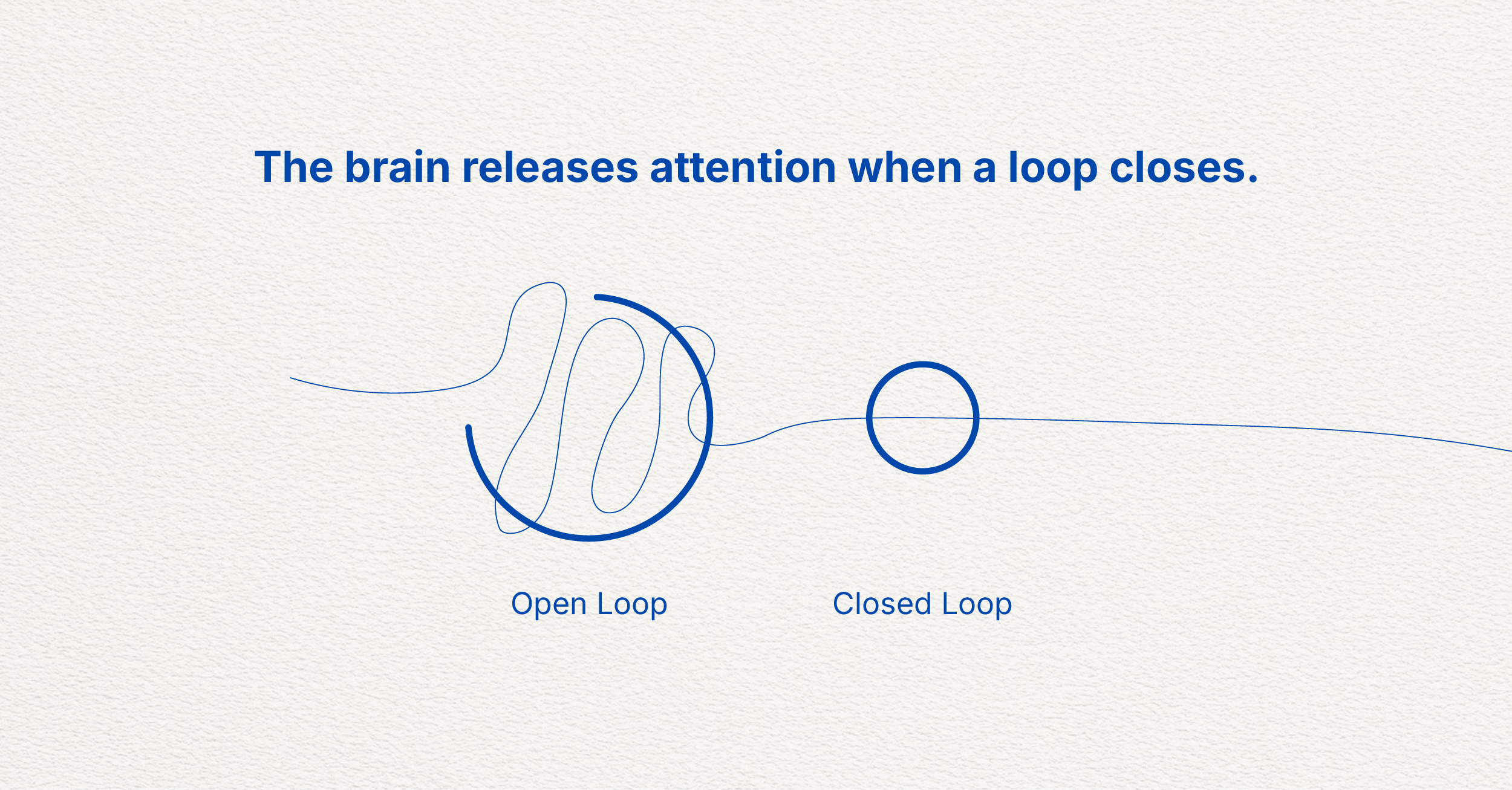
Sometimes the workday ends, but the loop doesn’t.
You stop working for the day, but part of your attention keeps circling the unfinished things. A project paused halfway through. An email you meant to send. A detail you need to remember tomorrow. Nothing urgent is happening, but something in your mind still feels slightly active, like a tab that never fully closed.
From the outside, rest happened. The laptop closed. The meeting ended. The workday finished. But internally, the system never received the signal that the effort cycle was complete. And when that signal doesn’t arrive, attention keeps moving.
This is one reason rest sometimes doesn’t work. The activity stops, but the attention behind the activity doesn’t always release.
The Brain Keeps Track of Unfinished Things
Psychologists have studied this pattern for nearly a century. In the 1920s, a Soviet psychologist named Bluma Zeigarnik noticed something curious while observing waiters in cafés. The waiters could remember unpaid orders in remarkable detail. But once the bill was settled, they quickly forgot the specifics.
Unfinished tasks stayed active in memory. Completed tasks disappeared.
This phenomenon later became known as the Zeigarnik effect—the tendency for unfinished tasks to remain more cognitively active than completed ones. Your brain keeps track of open loops, holding a small amount of attention on anything that hasn’t been resolved yet.
From an evolutionary perspective, this makes sense. For most of human history, unfinished tasks often meant something important still needed attention. Food that hadn’t been gathered. Shelter that wasn’t secure. A problem that couldn’t safely be ignored. Keeping unresolved tasks active helped humans survive.
But modern life produces far more loops than the brain was designed to track. Projects, messages, decisions, responsibilities, plans for tomorrow. Each one holds a small portion of attention until the brain recognizes that it has been resolved.
Why Pausing Isn’t the Same as Resting
When people think about rest, they usually think about stopping activity. Close the laptop. Leave the office. Sit down for the evening.
But stopping activity and releasing attention are not the same thing.
You can stop working while your mind continues holding several unfinished tasks in the background. Attention returns to them automatically. Did I send that file? What should I start with tomorrow? I need to remember that detail.
Nothing dramatic is happening, but the system remains slightly engaged. And because of that, rest never fully registers.
Many people describe this feeling as having “too many tabs open.” Even when you’re not actively working, the mind is still tracking what hasn’t been finished yet.
Open Loops and Mental Load
Open loops can also stack.
One unfinished task reminds you of another. Which reminds you of something you forgot yesterday. Which reminds you of a message you still need to send. The loops accumulate, and the background load slowly increases.
Each individual task might be small, but together they create a steady pull on attention.
When enough loops stay open at once, the mind never fully settles. Even during downtime, part of your attention remains allocated to tracking what still needs to be done.
Why This Can Feel Stronger for Some People
Everyone experiences open loops, but the effect can be amplified when attention is already divided.
People with ADHD often manage many competing signals at once. Unfinished tasks can multiply quickly as the mind jumps between them, leaving more loops active at the same time.
Parenting creates a similar dynamic. Even when focusing on one task, part of your attention is often monitoring something else — a child’s needs, the next transition in the day, something you need to remember later.
The more loops the brain is tracking simultaneously, the harder it becomes for attention to fully release.
What Helps the Brain Let Go
The brain doesn’t need every task to be completely finished before it can relax. But it does need some kind of closure signal—something that tells the system this cycle is done for now.
Sometimes that closure is small. Writing tomorrow’s task list so the brain stops rehearsing it. Sending one message that has been sitting unfinished all afternoon. Choosing a clear stopping point on a project instead of leaving it mid-motion.
Even mentally containing a task can help. One strategy therapists sometimes suggest is imagining placing the unfinished task into a container — a jar, a box, a notebook—and deliberately deciding that you will come back to it later. For some people, that mental boundary helps the brain stop holding the task actively in attention.
Not everyone finds this technique easy. But the principle behind it is simple: the brain needs to know where unfinished things belong.
When Rest Fails, It’s Usually Structural
When people struggle to relax, they often assume the problem is personal. They think they’re bad at resting, bad at boundaries, bad at switching off.
But much of the time the exhaustion isn’t mysterious.
It’s structural.
The brain is still tracking unresolved loops.
Once you see that dynamic, the goal shifts. Rest isn’t about perfectly shutting off work. It’s about helping the mind recognize where unfinished things belong.
Sometimes that means finishing something small. Sometimes it means containing the task so the brain knows it will be handled later. Sometimes it simply means choosing a clear stopping point.
When the brain recognizes that a loop has closed, attention releases.
And rest finally has somewhere to settle.
Listen / Explore:
Engage in the format that fits your energy.
Listen: The podcast explores this idea in audio form, designed to be followed from start to finish.
Explore: The free guide offers optional prompts and tools you can use selectively.
None are required. Choose what supports you.
