Why You Keep Starting Over With Planners, Routines, and Systems
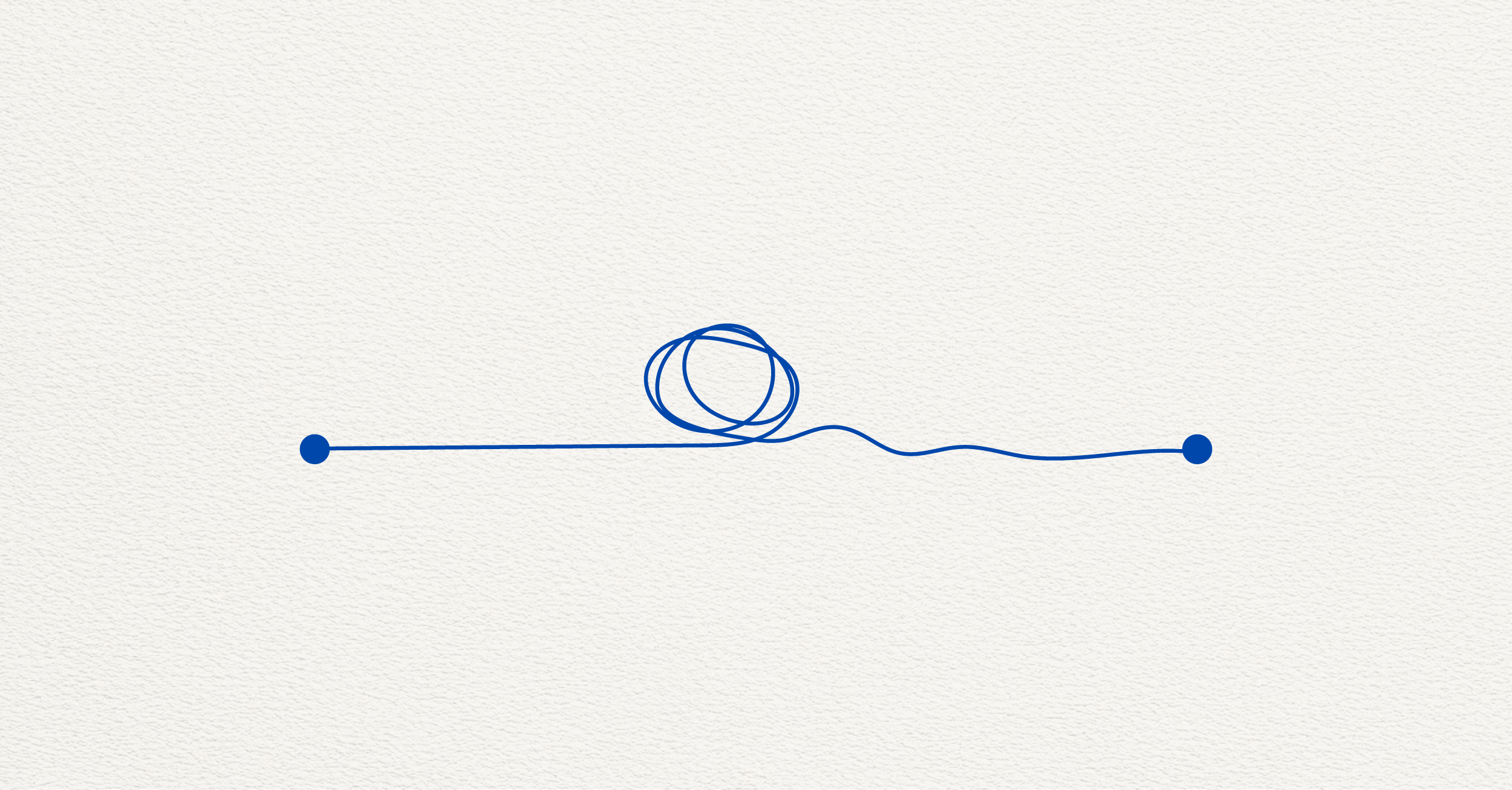
You can only restart your system so many times before it starts affecting how you see yourself.
At first, the resets feel hopeful.
You buy a new planner. You reorganize your schedule. You simplify your routines. You promise yourself you’ll keep things realistic this time.
And honestly, a lot of the time, you do.
This isn’t always a situation where someone is trying to wake up at 4:30 a.m., maintain twelve habits, meditate for an hour, meal prep every Sunday, and optimize every moment of their life.
In many cases, the systems people repeatedly abandon are already simplified.
The tasks are reasonable. The routines make sense. The goals are practical.
And yet the same thing still keeps happening.
For a little while, the structure feels supportive. Then life becomes stressful, emotionally demanding, overstimulating, unpredictable, or cognitively heavy.
And suddenly even interacting with the system starts feeling difficult.
Opening the planner feels overwhelming. Responding to messages feels impossible. Simple maintenance tasks begin stacking up. The routines disappear.
Then eventually comes the reset.
You decide you need a better method. A cleaner structure. A more sustainable approach.
So the cycle begins again.
One of the hardest parts of this experience is how easy it is to internalize it as a character problem.
Especially when the systems genuinely worked at first.
Because if something worked temporarily, it feels logical to assume you should have been able to maintain it.
And if you couldn’t maintain it, the conclusion often becomes:
I’m inconsistent. I lack discipline. I just need to try harder.
But many systems are quietly built around conditions that do not consistently exist in real life.
Stable energy. Predictable schedules. Low emotional stress. Minimal interruptions. Enough recovery time. Manageable cognitive load.
When those conditions disappear, the routines disappear too.
That doesn’t necessarily mean the routines were bad. It means they were dependent on a nervous system state that wasn’t consistently available.
This distinction matters because it completely changes how you interpret the breakdown.
A lot of people try to solve this problem by focusing on optimization.
Better habit tracking. Better time management. More accountability. More motivation.
But if the real issue is that your systems only function under ideal internal conditions, then optimization alone often doesn’t solve the underlying mismatch.
You can create a beautifully organized system that still collapses the second your nervous system becomes overloaded.
And overload can come from many directions.
Stress. Transitions. Sensory demands. Sleep disruption. Emotional exhaustion. Decision fatigue. Too many open loops. Uncertainty. Social demands. Context switching.
The difficult thing about nervous system overload is that it changes access.
The version of you who made the plan may not be the same version of you trying to follow it three days later.
That can sound strange if you’ve never experienced it. But many people know exactly what this feels like.
You can genuinely want to do something and still feel unable to access the energy, clarity, or initiation required to begin.
And when that happens repeatedly, it becomes tempting to keep searching for the perfect system.
The planner that will finally fix everything. The app that will make consistency automatic. The routine that will somehow survive every fluctuation in energy, stress, and capacity.
But often the issue is not that the tools are wrong. It’s that the design assumptions underneath them are incomplete.
Most systems are designed around an idealized version of consistency.
The assumption is usually something like:
If the structure is simple enough, clear enough, motivating enough, or organized enough, you should be able to maintain it consistently.
But real life rarely operates under stable conditions for long.
And nervous systems are not static.
Your capacity changes. Your tolerance changes. Your cognitive bandwidth changes. Your ability to process information changes. Your ability to initiate tasks changes.
Some days you can hold complexity easily. Other days answering one email feels enormous.
That variability is often treated like a flaw that needs to be eliminated.
But if the variability continues existing no matter how hard you try to optimize yourself, then eventually it becomes necessary to ask a different question.
What if the system needs to account for changing conditions instead of assuming they won’t happen?
This is where a lot of traditional productivity advice starts breaking down.
Because most productivity systems are designed around output stability.
They assume relatively predictable access to energy, focus, emotional regulation, executive function, and recovery.
And if your internal conditions are less stable than that, then following the advice can become exhausting.
Not because you’re lazy. But because you’re constantly trying to force yourself into systems that were designed for a different operating reality.
This is also why “simple” advice can sometimes feel surprisingly hard to apply.
Even things like:
Just make a list. Just create a routine. Just break it into smaller steps.
Those strategies can absolutely help.
But if your nervous system is already overloaded, even small systems can become cognitively heavy.
Because every system still requires interaction. Tracking. Remembering. Re-entering. Transitioning. Decision-making. Maintenance.
And when people repeatedly fail to maintain systems, they often respond by increasing control.
More structure. More tracking. More pressure. More rules.
But sometimes the actual problem is that the structure has become too fragile to survive reality.
One of the biggest shifts happens when you stop viewing these breakdown points purely as failures.
Because patterns contain information.
If your systems repeatedly collapse during stressful weeks, emotional overload, transitions, or periods of high cognitive demand, those moments are revealing something important about the conditions your life actually operates within.
And once you stop treating those conditions like exceptions, your design priorities start changing.
Instead of asking: How do I maintain this perfectly?
You start asking: How easy is this system to re-enter after disruption? How much cognitive load does this require? How much maintenance energy does this assume? What happens when my capacity drops? Can this still function during stressful periods?
Those questions lead to very different systems.
Often simpler ones. More flexible ones. Systems with shorter loops. Systems with less friction. Systems designed around recovery instead of constant optimization.
This does not mean abandoning structure.
In fact, many people operating with high cognitive load need supportive structure deeply.
But supportive structure is different from rigid structure.
Supportive structure accounts for the fact that your nervous system changes states.
It recognizes that your hardest days are part of the design environment. Not interruptions to it.
This perspective can also reduce a tremendous amount of shame.
Because when you repeatedly lose access to routines, it can genuinely start feeling like something is wrong with you.
Especially if other people seem able to maintain systems more consistently.
But different nervous systems experience cognitive load differently. Different people have different thresholds for overwhelm. Different amounts of recovery capacity. Different sensory profiles. Different executive functioning patterns.
And many people are trying to force themselves into systems that were never designed with those realities in mind.
That doesn’t mean structure is impossible.
It means the structure has to match the conditions it actually needs to survive inside.
This is one of the core ideas behind Why Your Week Keeps Collapsing as well. Not creating a perfectly optimized life. But learning how to notice where friction keeps appearing, what conditions repeatedly create collapse, and what your nervous system is actually communicating through those patterns.
Because tension is often information.
And when you stop treating every breakdown as personal failure, you can start building systems that work with your actual life instead of against it.
If you want to hear this explored out loud, this week's podcast episode goes deeper into why nervous system states change what's actually available to you—and what that means for how you design your days.
