Enterprise Clinical Education / Professional Learning System
Designing a Modular Curriculum Architecture
for Global Clinical Education
Context
This curriculum system was developed for a global healthcare manufacturer to organize a broad portfolio of implant-focused education into a cohesive, scalable learning framework.
The existing program included on-demand modules, lectures, hands-on intensives, and collaborative study formats delivered across regions. While the content itself was strong, it functioned primarily as a catalog of offerings rather than a clearly structured progression model. The challenge was to translate a complex inventory of courses into an integrated architecture that clarified learning pathways, stakeholder roles, and competency development across multiple experience levels.
The system needed to support both centralized strategic alignment and regional customization, ensuring consistency without limiting local flexibility.
The Structural Approach
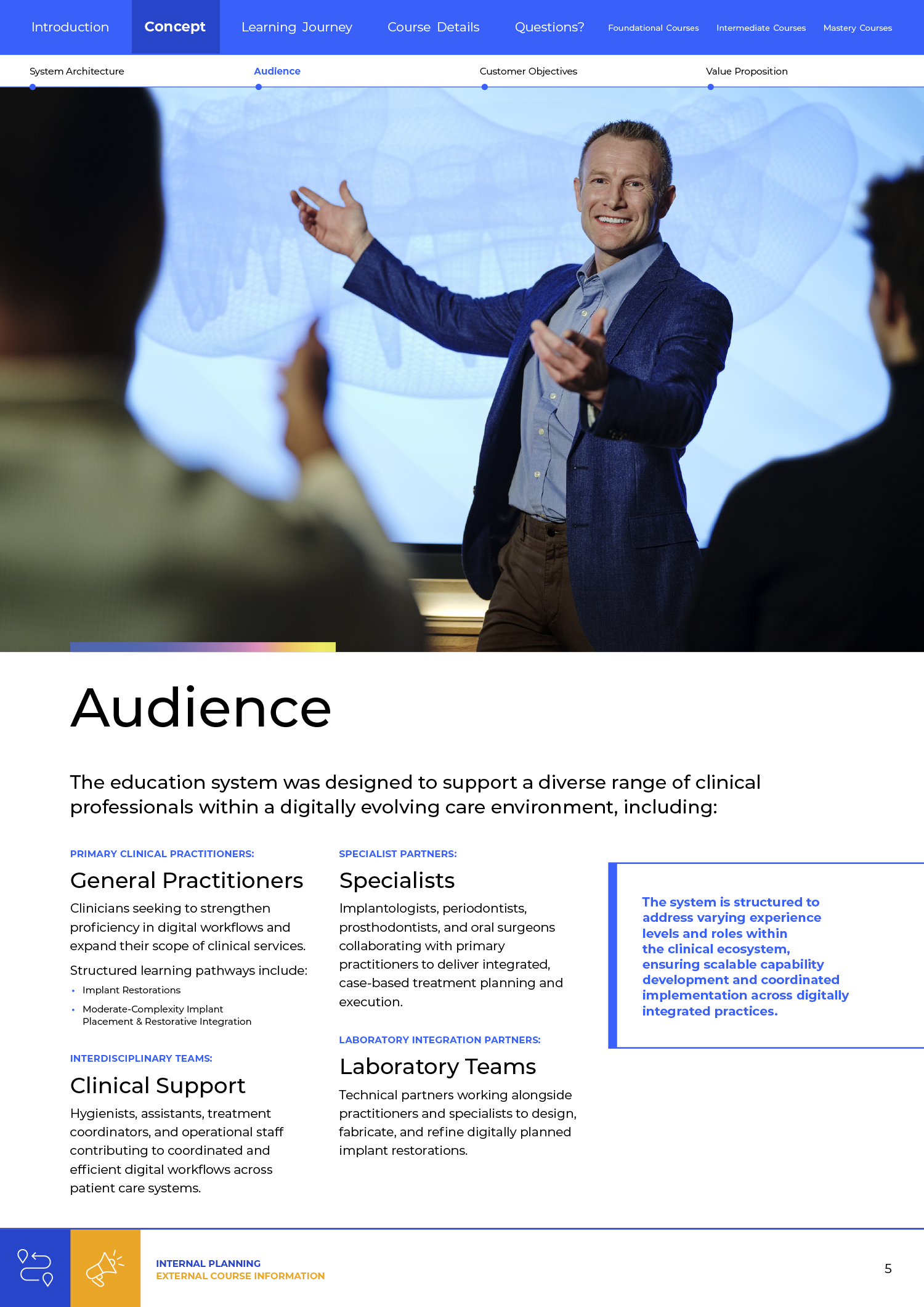
I designed a modular curriculum architecture that organized courses into clearly defined progression tiers while distinguishing between practitioner pathways, interdisciplinary team development, and specialist collaboration.
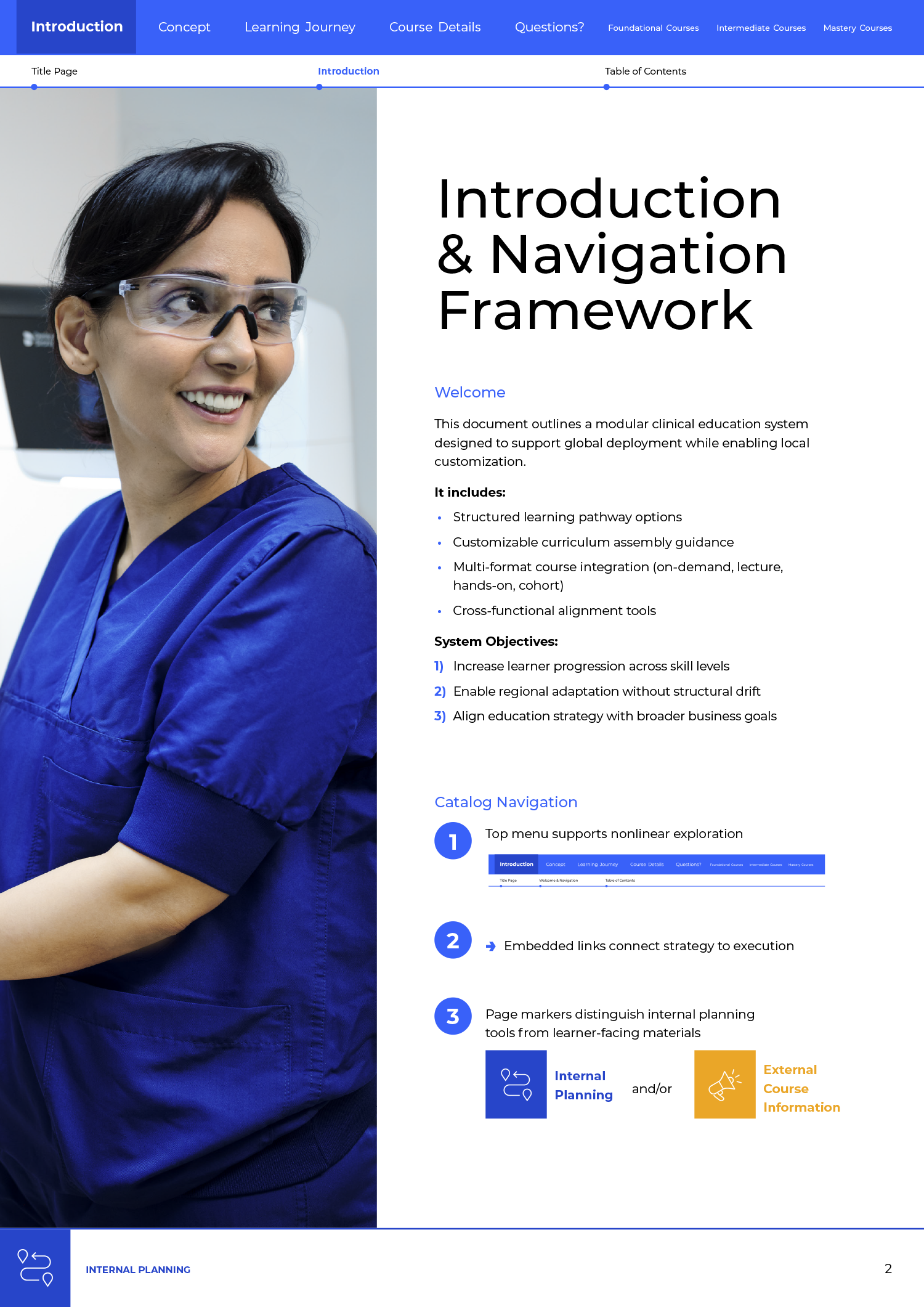
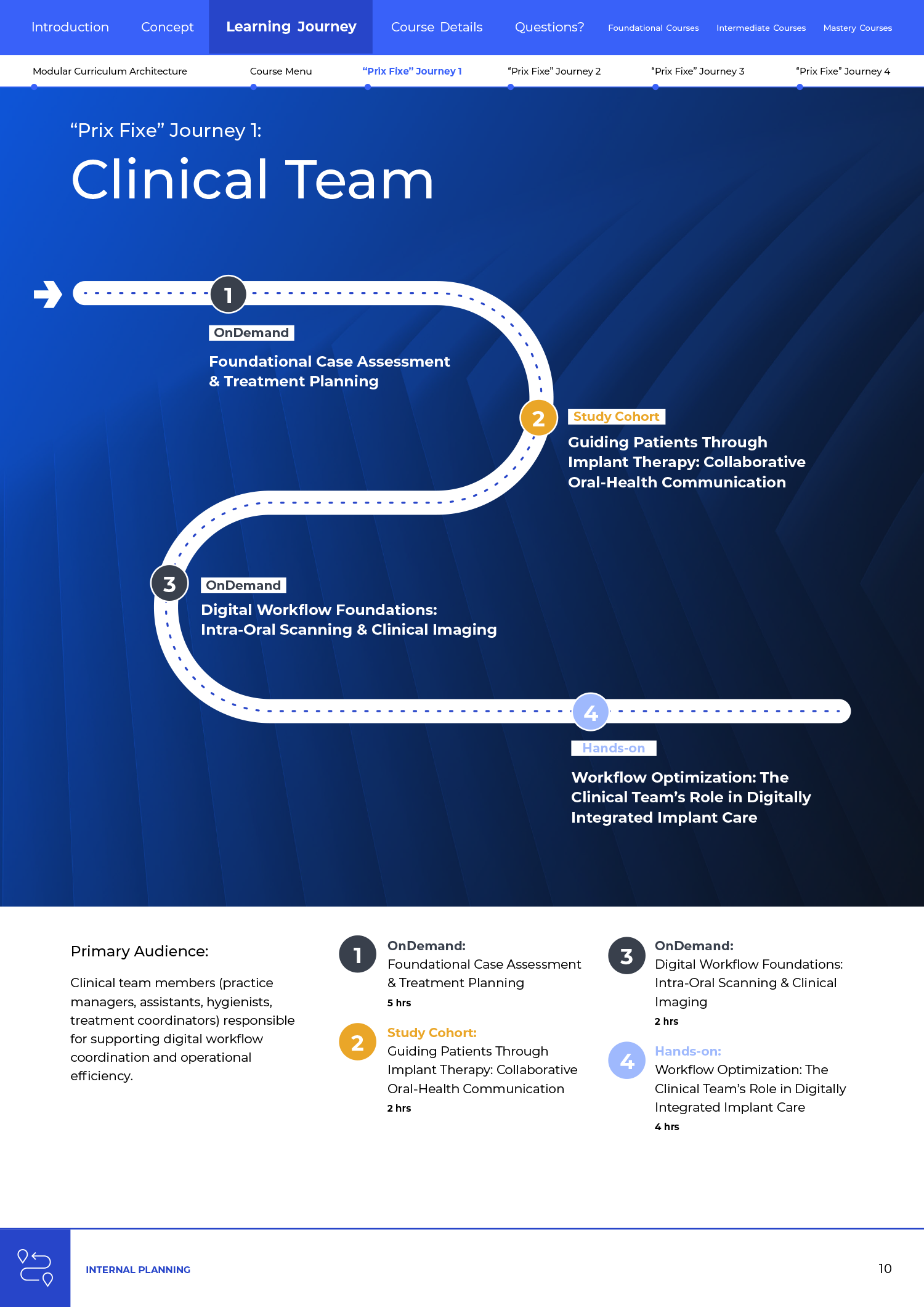
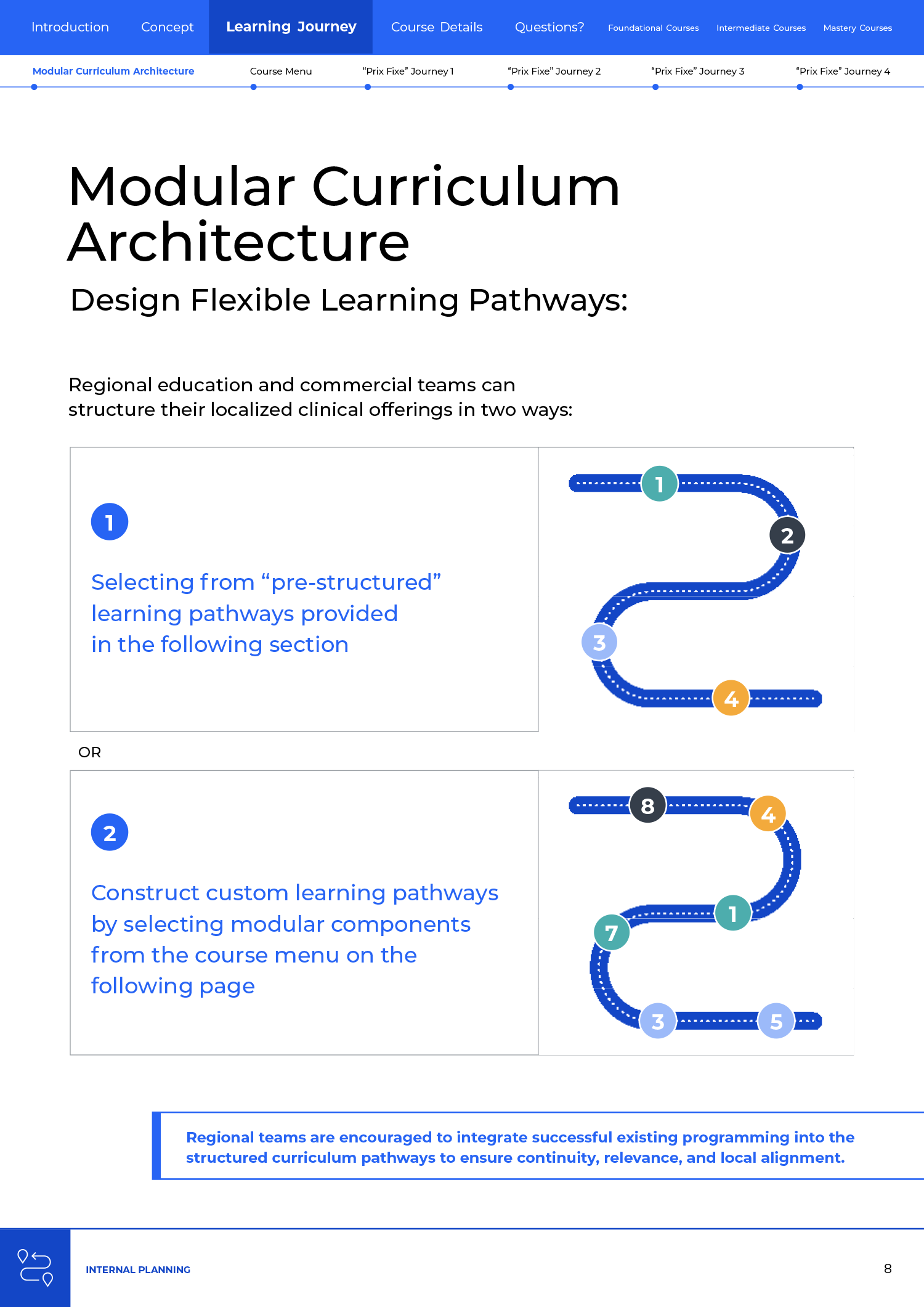
Navigation and hierarchy were restructured to support both nonlinear exploration and intentional sequencing. Pre-structured learning journeys were introduced to guide implementation, while a component-based framework allowed regional teams to assemble custom pathways using standardized modules.
Visual pathway diagrams were developed to make progression explicit rather than implied, reducing cognitive friction and making advancement across competency levels immediately legible. The structure balanced clarity and flexibility, allowing the system to function as both a strategic framework and a practical deployment tool.
The Outcome
The final system transformed a collection of standalone offerings into a cohesive education ecosystem.
Learning progression became visually and structurally clear, supporting capability development from foundational digital workflows through advanced surgical applications. Regional teams gained a framework that enabled customization without structural drift, while stakeholders across roles could see how their development connected to the larger clinical system.
The result was a scalable, visually coherent curriculum architecture that strengthened alignment between education strategy, operational implementation, and long-term professional growth.