Workshop Education / Professional Learning
Translating Literacy Research into a
Cohesive Visual Learning System
Context
This workshop deck was designed to support school leaders and educators in understanding the research behind reading motivation and comprehension.
The content combined academic studies, national data (NAEP trends), instructional principles, and strategic recommendations. The challenge was to maintain research integrity while making the material accessible and actionable for educators.
Slides needed to support live presentation, discussion, and participant interaction.
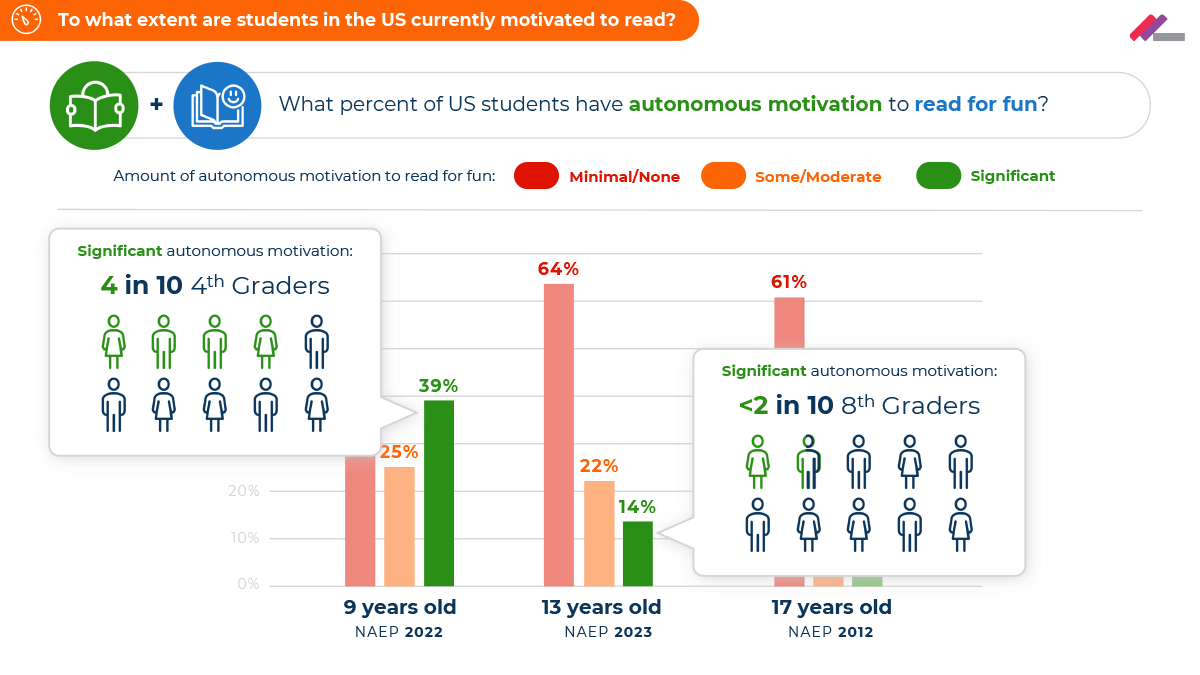
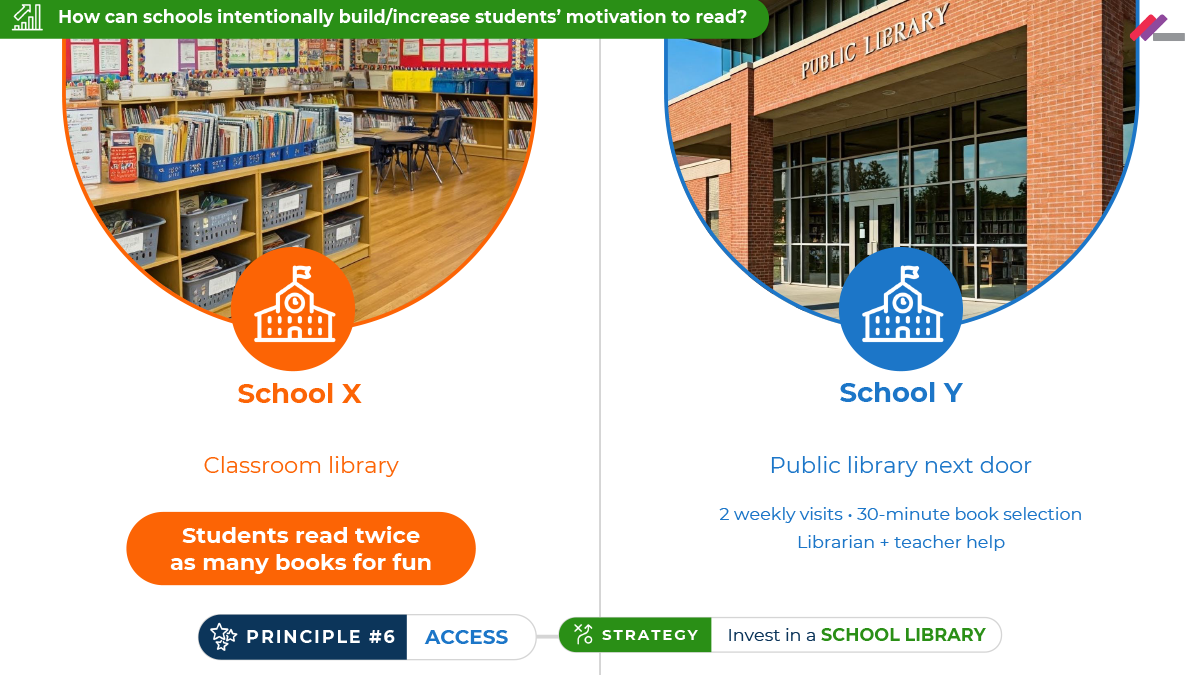
Comparative visuals clarify cause-and-effect relationships, allowing workshop participants to see how access structures influence reading behavior.
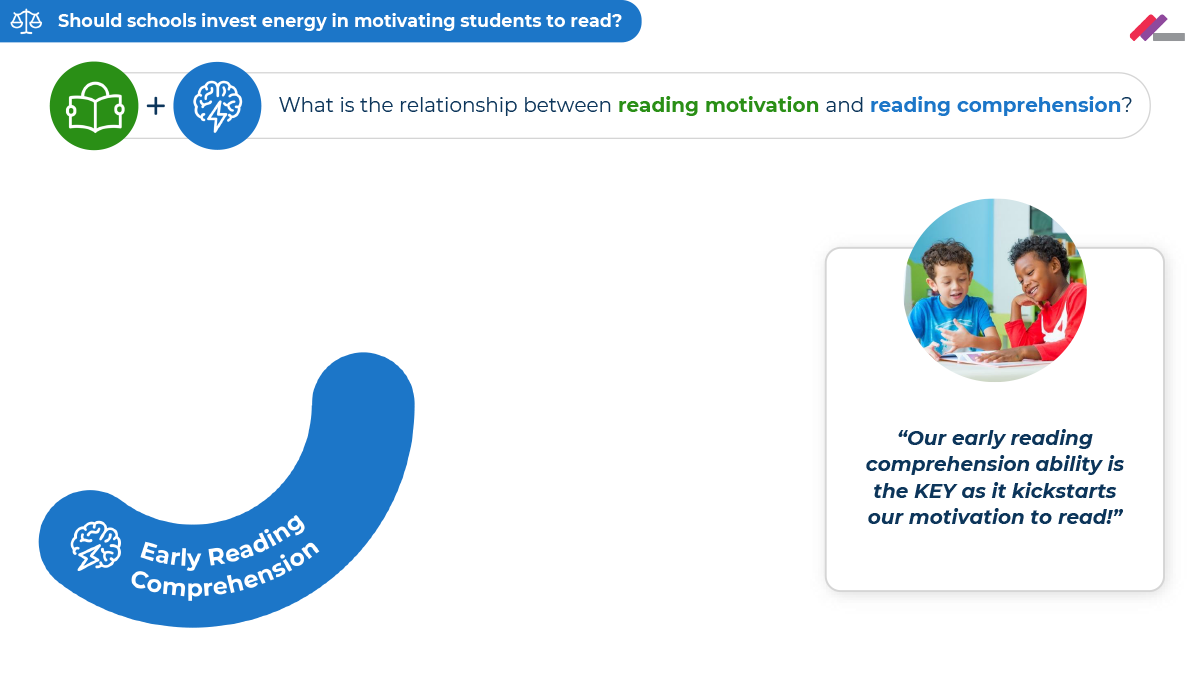
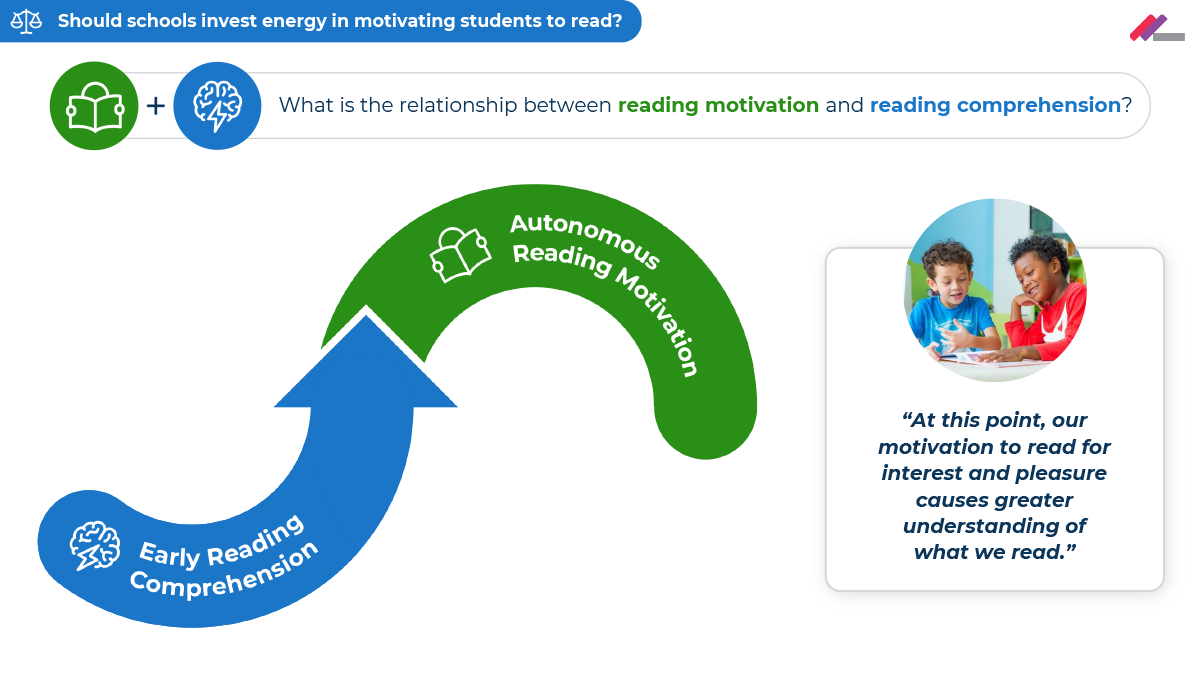
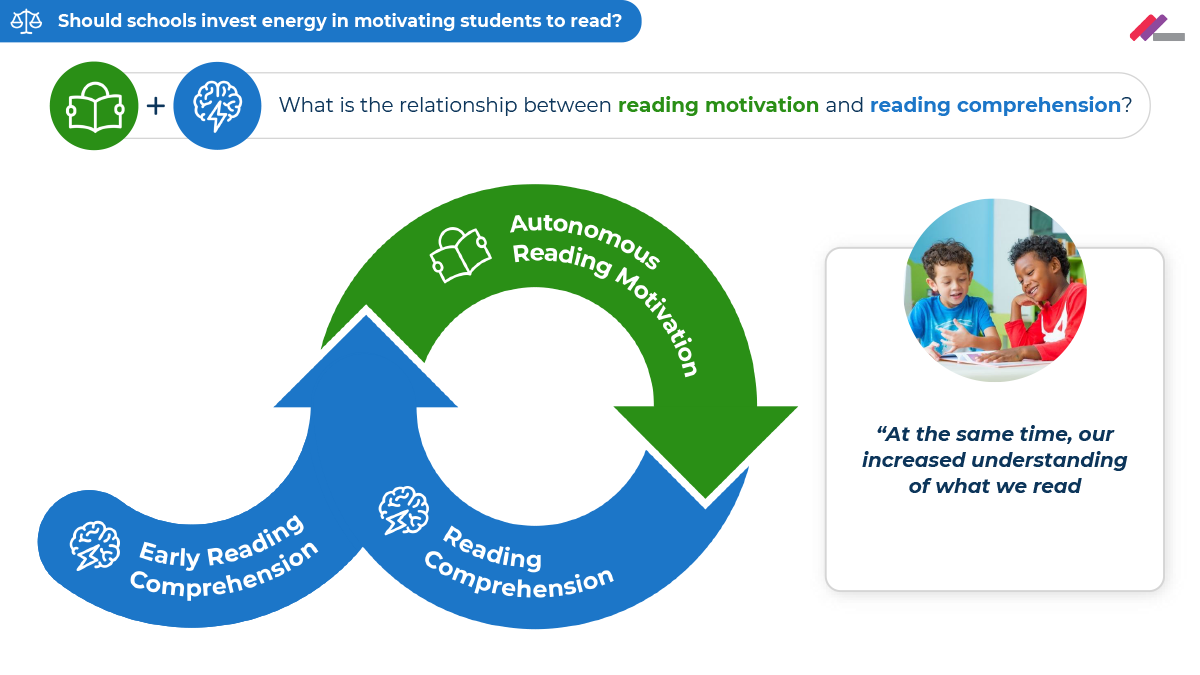
The comprehension–motivation cycle was designed as a progressive build. As each element appears, the visual mirrors the cognitive sequence described in the research, reinforcing retention through motion and repetition.
Structural Approach
I developed a cohesive visual system to translate dense literacy research into an accessible, workshop-ready format. The structure needed to support live instruction from an experienced facilitator while reinforcing key concepts visually and conceptually.
I established a consistent hierarchy to distinguish research evidence, instructional principles, and strategic recommendations, ensuring participants could follow complex ideas without cognitive overload.
Conceptual slides (such as the comprehension–motivation cycle) were designed with progressive animation in mind, allowing the model to build in stages that mirrored the recursive relationship described in the research. In addition to the projected slides, I designed a companion participant worksheet that extended the visual model into a physical learning tool, supporting engagement and retention beyond the screen.
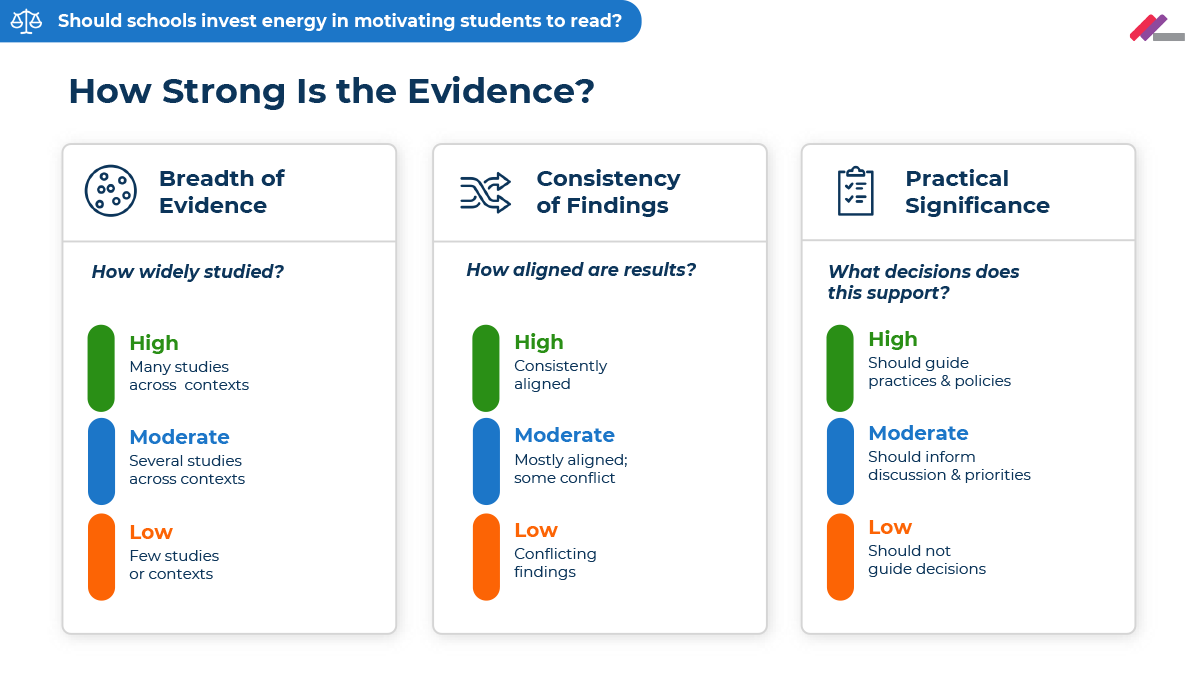
These slides organize research strength into clear visual categories, helping educators quickly interpret breadth, consistency, and practical implications without wading through academic language.
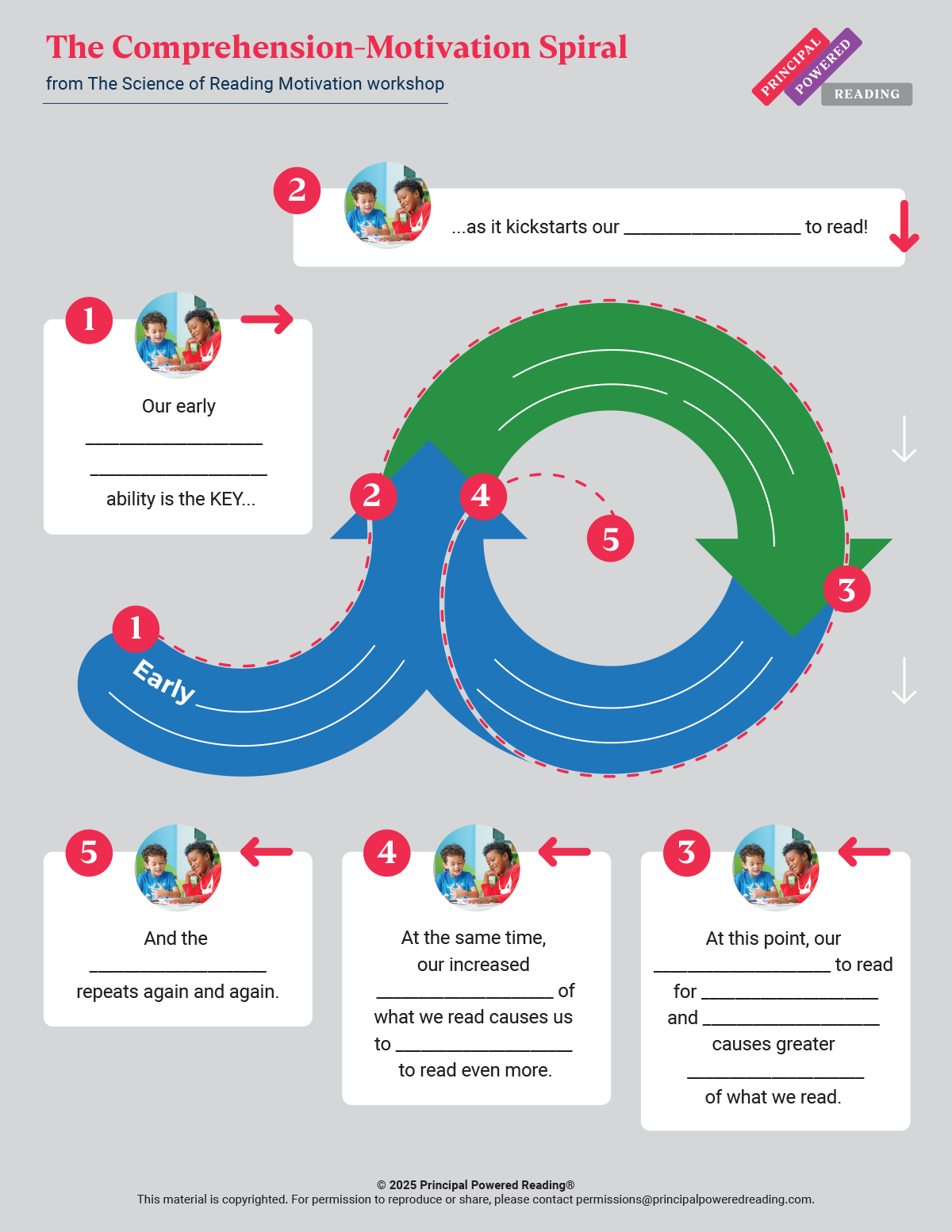
The fill-in spiral worksheet extends the conceptual model into a physical artifact. Participants actively reconstruct the cycle themselves, strengthening comprehension through guided interaction rather than passive viewing.
The Outcome
The final presentation created a cohesive visual system that supported both instruction and retention.
The animated comprehension–motivation cycle reinforced the recursive relationship between early comprehension and autonomous reading motivation. Instead of presenting the concept as static text, the cycle builds visually over time, mirroring the research claim itself.
Educators were able to engage with research evidence, practical implications, and strategic recommendations within a unified visual framework.
The result was a presentation that felt research-grounded, visually consistent, and instructionally clear.